Practical Guides
FRKia Picanto, Ceed, Sportage: What Does the Roadworthiness Test Show?
Published 30 October 2026 · 6 min read
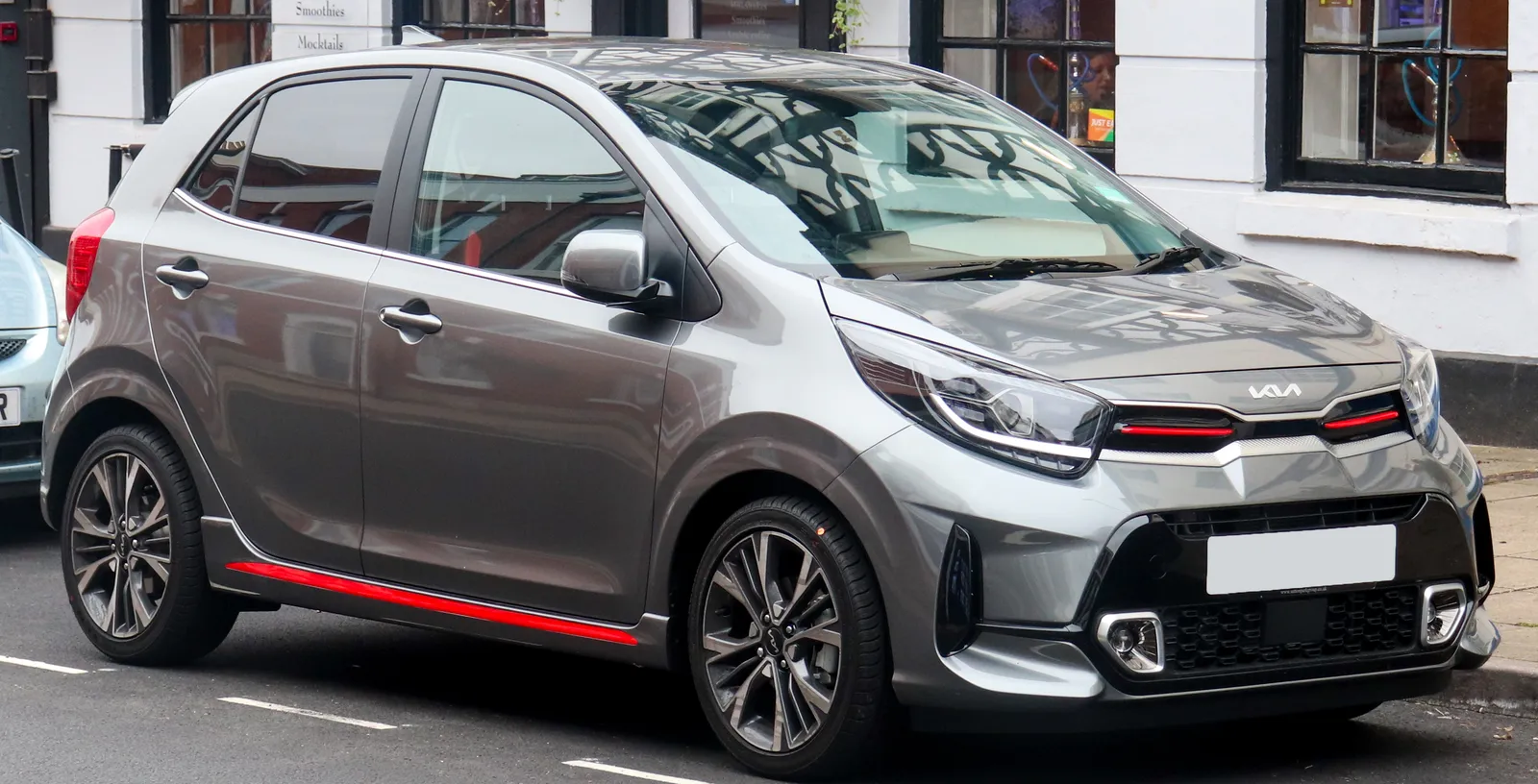
Kia promotes a 7-year or 150,000 km manufacturer warranty across its whole range in France. That’s a commercial policy, not a measure of reliability: it says nothing about the actual condition of the cars on the road. For that, we looked at the official French roadworthiness test data (UTAC-OTC), model by model. The result is more nuanced than the brand’s image: an average above the national rate, pulled up by older generations, and recent models that do clearly better.
Kia against other brands
Across the 17 Kia families tracked on this site (228,787 roadworthiness tests represented), the weighted average retest rate stands at 21.82%. That’s 2.88 points above the national reference rate (18.94%), placing Kia 25th out of 38 brands. Among the 27 brands with a significant sample (more than 5 families tracked), Kia comes 16th.
| Brand | Average retest rate | Rank (/38) |
|---|---|---|
| Hyundai | 14.86% | 5 |
| Toyota | 20.92% | 22 |
| Kia | 21.82% | 25 |
| Volkswagen | 23.44% | 28 |
| Renault | 24.91% | 33 |
| Peugeot | 25.55% | 35 |
The most striking gap is with Hyundai, which belongs to the same group and shares many technical platforms with Kia: almost 7 points separate the two brands in France. Kia does, however, stay ahead of Volkswagen, Renault and Peugeot, and just behind Toyota. The full ranking is on the rankings page (in French).
The Kias that stand out
Six of the 17 Kia families come in below the national rate, accounting for around 30% of the brand’s tests. The three best with sufficient volume are all recent generations:
| Model | Retest rate | National rank (/530) | Tests |
|---|---|---|---|
| Stonic | 6.21% | 49 | 15,062 |
| Picanto III | 7.89% | 85 | 22,460 |
| Ceed III | 8.13% | 89 | 7,124 |
| XCeed | 10.06% | 119 | 5,050 |
The Picanto III is the most representative: with 22,460 tests, it’s Kia’s third most tested family, and it sits within the top sixth of the national ranking. The Ceed III and XCeed rest on more modest volumes (fewer than 7,500 tests each).
One case stands apart: the Soul I shows the brand’s best rate (6.01%, 43rd out of 530), but on just 3,861 tests. For an older generation, this result should be treated with caution, like those of several older Hyundais noted in our article on its sister brand. Without the Soul I, Kia’s average rises from 21.82% to 22.09%.
The Kias that do less well
At the other end, the families lagging furthest behind are older generations:
| Model | Retest rate | National rank (/530) | Tests |
|---|---|---|---|
| Picanto I | 36.03% | 507 | 11,473 |
| Cee’d II | 32.52% | 452 | 12,492 |
| Rio III | 31.30% | 423 | 17,095 |
| Sportage III | 28.84% | 396 | 22,776 |
The Picanto I ranks 507th out of 530, among the 25 lowest-ranked families in France. The Carens III does even worse (38.16%, 523rd), but on a small volume (4,786 tests). The Rio II and Rio III show exactly the same rate (31.30%): the UTAC source appears to group them together.
The most notable point concerns the Sportage IV. It’s Kia’s most tested family (29,674 tests), and it isn’t one of the older generations. Yet its rate of 23.95% (309th out of 530) remains above the national rate. It’s the brand’s main recent model not to follow the trend set by the Picanto III, Stonic and Ceed III.
Manufacturer recalls
RappelConso lists 17 separate notices concerning the Kia families tracked on this site, published between May 2022 and December 2025. Counted using the same method as our recalls ranking by brand (a recall counts once per family it concerns), that comes to 34 cumulative recalls across 12 of the 17 families. Kia is 15th in that ranking, close to Hyundai (30) and far from the most affected brands (Peugeot, 392; Citroën, 246).
Twelve of these notices mention a fire risk and eight a risk of injury (three involve both). The Sportage accounts for the most notices (six). None of them specifies the generation concerned: each one is therefore attached to every possible generation of the model, which mechanically inflates the cumulative total (a single notice on the Picanto counts three times). A recall doesn’t mean a widespread defect, and it isn’t reflected in the retest rate.
The view from abroad
Our cross-country mapping table doesn’t yet link the Dutch and British Kia models to the French families. The figures below should therefore be read on their own terms, not as direct confirmation of the French results.
In the Netherlands (APK), Kia does better than in France: with an average failure rate of 36.5% across around 502,800 tests, the brand comes in below the national average (37.5%) and ranks 5th among mainstream and premium brands with a significant sample (see our APK ranking). The RDW data is aggregated across all generations: the Dutch “Picanto” (206,477 tests) therefore mixes several generations. In its main age bracket (11-15 years), it fails in 38.65% of cases, against an average of 39.72%. The detail is on the Kia in the Netherlands page (in French).
In the UK (MOT), Kia is 13th out of 29 brands, with an average failure rate of 28.18% across 24 generations, slightly ahead of Hyundai (15th, 28.79%) and below the national benchmark of around 30%. The British data distinguishes between generations, and the pattern resembles the one seen in France: recent generations (Picanto JA, Stonic, first-generation Niro) are below their age-bracket average, older ones (first- and second-generation Cee’d, Picanto SA, Rio UB) above it.
Two models diverge, though. The Sportage Mk4 (2016-2021, over 150,000 MOTs) fails in 18.66% of cases in its 5-8 year bracket, against a national average of 20.54%, whereas the Sportage IV is above the national rate in France. Conversely, the Ceed Mk3 is above its 3-5 year bracket average in the UK (16.07% against 14.66%), whereas the Ceed III is one of the better Kias in France. The detail is on the Kia in the UK page (in French).
How much does a used Kia cost?
Here is the estimated used price of four Kia models, at ages matching their production period:
| Model | Reference new price | Estimated used price |
|---|---|---|
| Picanto III | €16,000 | ~€10,370 at 3 years, ~€7,560 at 6 years |
| Stonic | €27,000 | ~€17,500 at 3 years, ~€12,760 at 6 years |
| Ceed III | €26,000 | ~€16,850 at 3 years, ~€12,280 at 6 years |
| Sportage IV | €28,900 | ~€13,650 at 6 years, ~€11,060 at 8 years |
This is an indicative estimate, not a valuation: it applies a typical depreciation curve by segment to a reference new price. Only the Sportage IV has a model-specific new price; for the other three, it’s the average reference price for their segment. To compare the models within reach of your budget, see the budget simulator (in French).
What these figures don’t tell you
The retest rate measures the safety points checked, not overall mechanical reliability: an engine or gearbox failure won’t show up unless it affects a point that’s checked. The UTAC data doesn’t give the age of the vehicles tested either. We therefore can’t measure how far the age of the Kia fleet explains these gaps: comparing generations of the same model (Picanto I against Picanto III, for example) suggests that age matters, without allowing us to put a figure on it. See the methodology (in French).
Our take
On the measure of the French roadworthiness test, Kia isn’t a particularly reliable brand: a 21.82% retest rate, almost 3 points above the national rate, 25th out of 38, a long way behind Hyundai. The average does, however, hide two very different ranges. Recent generations (Picanto III, Stonic, Ceed III, XCeed) rank among the good results nationally, while older ones (Picanto I, Cee’d II, Rio III, Sportage III, Carens III) lag clearly behind. The Sportage IV, the most tested model, remains the recent exception above the average in France, without the British data bearing that out. When buying used, the generation therefore matters more than the brand. The model-by-model detail, including running costs, is on the Kia brand page (in French).
Data sources: UTAC-OTC (French roadworthiness test, 2025), RappelConso (data.gouv.fr), RDW (Netherlands, CC0 licence), DVSA MOT testing data (UK, Open Government Licence v3.0). Manufacturer warranty: kia.com (accessed 30 October 2026). Full methodology on the methodology page (in French).
— Also worth reading
Practical Guides
Suzuki Swift, Vitara, Ignis: What Does the Roadworthiness Test Show?
What does the official UTAC-OTC data say about Suzukis? Retest rates by model, a comparison with other brands, recalls and the view from abroad.
15 November 2026 · 5 min read
Practical Guides
Nissan Micra, Juke, Qashqai: What Does the Roadworthiness Test Show?
What does the official UTAC-OTC data say about Nissans? Retest rates by model, a comparison with other brands, recalls and the view from abroad.
11 November 2026 · 5 min read
Practical Guides
Fiat 500, Panda, Punto: What Does the Roadworthiness Test Show?
What does the official UTAC-OTC data say about Fiats? Retest rates by model, a comparison with other brands, recalls and the view from abroad.
6 November 2026 · 5 min read