Barometers & Studies
FRLancia: What Do the APK and Roadworthiness Test Data Show?
Published 4 October 2026 · 4 min read
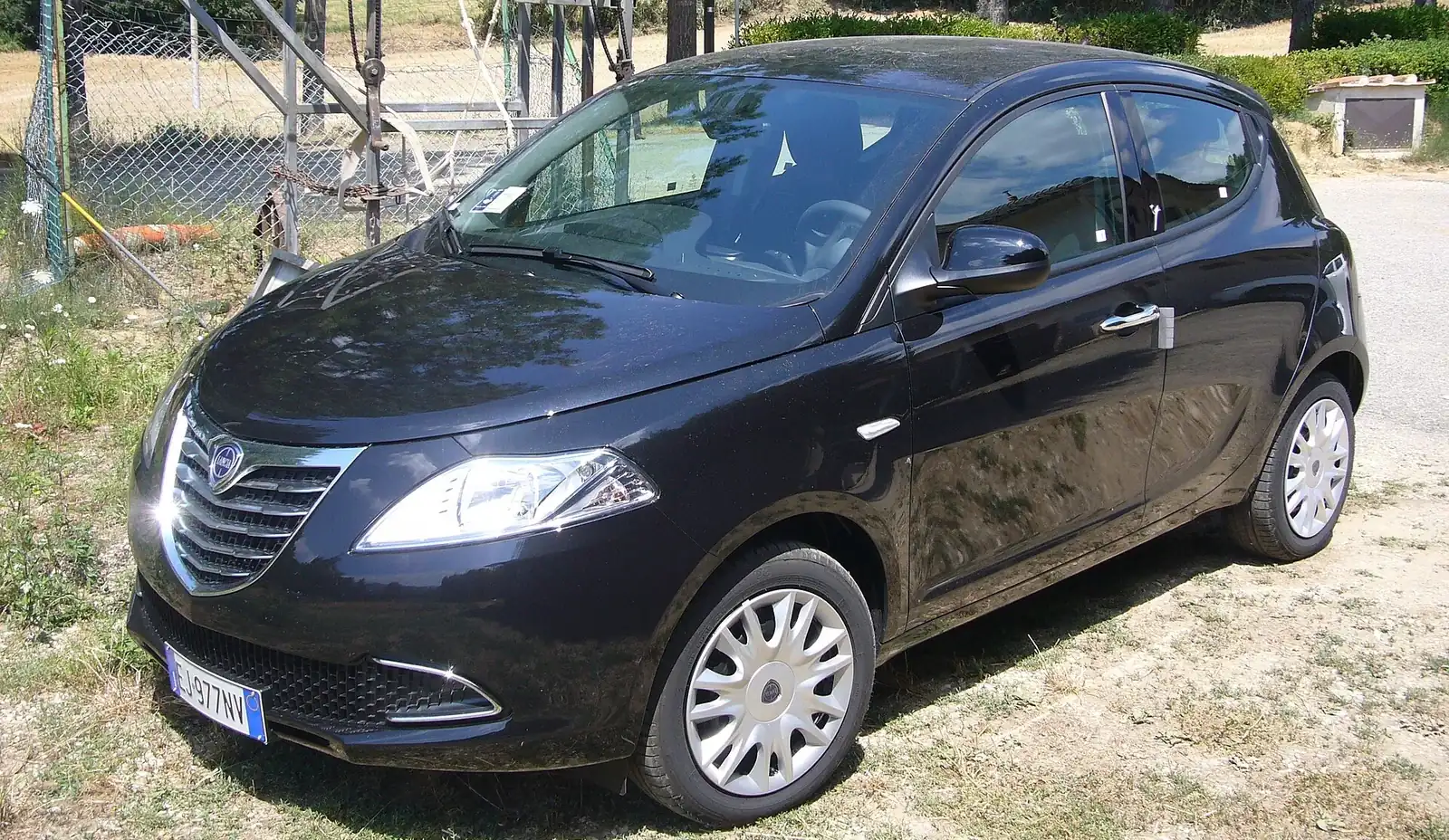
Lancia has all but vanished from French roads, but the Italian brand is still very much part of the Dutch fleet, where its models go through the APK every year. Here’s what the official data shows — and the picture changes completely depending on whether you look at the raw ranking or at cars of the same age.
In the Netherlands (APK)
The RDW (the Dutch vehicle authority) publishes the results of the APK (Algemene Periodieke Keuring, the Dutch equivalent of the roadworthiness test) as open data. Five Lancia models clear the 200-test threshold used on this site, for a total of 10,665 APKs. The brand’s overall failure rate stands at 42.73%, and Lancia ranks 75th out of 84 brands in the Dutch ranking, just behind Fiat.
That ranking is above all down to the age of the fleet. No Lancia under 8 years old appears in the data, and half of all tests (50.5%) involve cars aged 15 or over, against 32.4% for the Dutch fleet as a whole. Since failure rates rise steadily with age, that weighs heavily on the brand. Compared bracket by bracket, Lancia actually sits right at the national average:
| Age bracket | Lancia tests | Lancia | National average (NL) |
|---|---|---|---|
| 8-11 years | 934 | 30.62% | 32.18% |
| 11-15 years | 4,341 | 40.31% | 39.72% |
| 15 years+ | 5,390 | 46.77% | 47.50% |
Model by model, the same holds for the three most tested models:
| Model (RDW) | Age bracket | Tests | Lancia failure rate | National average |
|---|---|---|---|---|
| Ypsilon | 8-11 years | 934 | 30.62% | 32.18% |
| Ypsilon | 11-15 years | 2,685 | 39.74% | 39.72% |
| Ypsilon | 15 years+ | 2,993 | 47.41% | 47.50% |
| Delta | 11-15 years | 1,120 | 40.63% | 39.72% |
| Delta | 15 years+ | 957 | 43.89% | 47.50% |
| Musa | 11-15 years | 316 | 40.19% | 39.72% |
| Musa | 15 years+ | 1,221 | 47.26% | 47.50% |
| Voyager * | 11-15 years | 220 | 45.91% | 39.72% |
| Y * | 15 years+ | 219 | 47.95% | 47.50% |
* Volume only just above the 200-test threshold: indicative result only.
The Ypsilon, which alone accounts for nearly two thirds of Lancia tests, tracks the national average in every age bracket, and does slightly better between 8 and 11 years. The Delta is marginally above average at 11-15 years, but clearly below it beyond 15 years (43.89% against 47.50%). The Musa is in line with the average. Only the Voyager stands out (+6 points), but on just 220 tests. The brand’s other models (Thesis, Thema, Phedra, Lybra, Kappa…) fall below the 200-test threshold and aren’t tracked.
Two methodological caveats apply to these figures, as with every APK ranking published on this site: the data is aggregated across all generations of a model (the RDW doesn’t natively distinguish between generations — “Ypsilon” therefore covers several of them), and the pass/fail result isn’t published directly — it’s inferred by cross-referencing test events with recorded defects. Full details are on the Lancia in the Netherlands page, and the Netherlands section has the complete ranking (both in French).
In France (roadworthiness test)
In France, the sample comes down to a single model: the Ypsilon, tracked as two families in the UTAC data. Together they account for 8,925 roadworthiness tests, with a weighted average retest rate of 21.26%, against 18.94% nationally. That puts Lancia 24th out of 38 brands in our 2025 barometer, where it is one of seven brands flagged as having a “limited sample”.
| Model | Tests | Retest rate | National rank (/530) |
|---|---|---|---|
| Ypsilon I | 4,120 | 13.91% | 178 |
| Ypsilon II | 4,805 | 27.57% | 376 |
The gap between the two families is wide — almost 14 points. The source data doesn’t specify the years each family covers, so we can’t say for certain whether this is simply an age effect or a genuine difference between generations.
As for recalls, RappelConso lists 3 distinct notices concerning the Ypsilon, published between December 2025 and June 2026 (nitrogen oxide emissions on the 1.3-litre diesel, insufficient clearance around the 48V belt starter-generator, risk of a fuel leak). None of them specifies the generation concerned, so they’re attached to both families and counted twice in our recalls ranking. As with every brand, a recall doesn’t mean a widespread defect, and it isn’t reflected in the retest rate.
A note on sample sizes
For a brand this rare, volumes remain modest: a few thousand tests per model at best, a few hundred for the Voyager and the Lancia Y in the Netherlands, and a single range (the Ypsilon) in France. A gap of a few points may therefore come down to chance rather than a real difference in quality. These rates should be read with caution — the same principle that applies to brands represented by just one or two models in the barometer.
Key takeaways
The retest rate or APK failure rate measures compliance with the safety points checked, not overall mechanical reliability — see the methodology page (in French). On this measure, Lancia’s poor ranking in the Netherlands (75th out of 84) mostly reflects an ageing fleet: at the same age, the Ypsilon, Delta and Musa are on a par with the national average. In France, the brand comes down to the Ypsilon, slightly above the average retest rate on a limited sample. The full detail is available on the Lancia brand page (in French).
Source data: RDW (Netherlands, CC0 licence), UTAC-OTC (French roadworthiness test, 2025), RappelConso (data.gouv.fr). Full methodology on the methodology page (in French).
— Also worth reading
Barometers & Studies
Dacia: Is a Budget Car Less Reliable? What the Roadworthiness Test Shows
Sandero, Duster, Logan... What does France's official UTAC-OTC data say about Dacia? Retest rates by model, comparison and recalls.
16 October 2026 · 6 min read
Barometers & Studies
Toyota: Does Its Reliability Reputation Hold Up at the Roadworthiness Test?
What does France's official UTAC-OTC data say about Toyota? Retest rates by model, comparison with other brands, and recalls.
10 October 2026 · 6 min read
Barometers & Studies
Is Seat Reliable? What the APK and Roadworthiness Test Data Show
APK pass rates in the Netherlands and retest rates in France, model by model, across the Seat range.
1 October 2026 · 5 min read