Barometers & Studies
FRToyota: Does Its Reliability Reputation Hold Up at the Roadworthiness Test?
Published 10 October 2026 · 6 min read
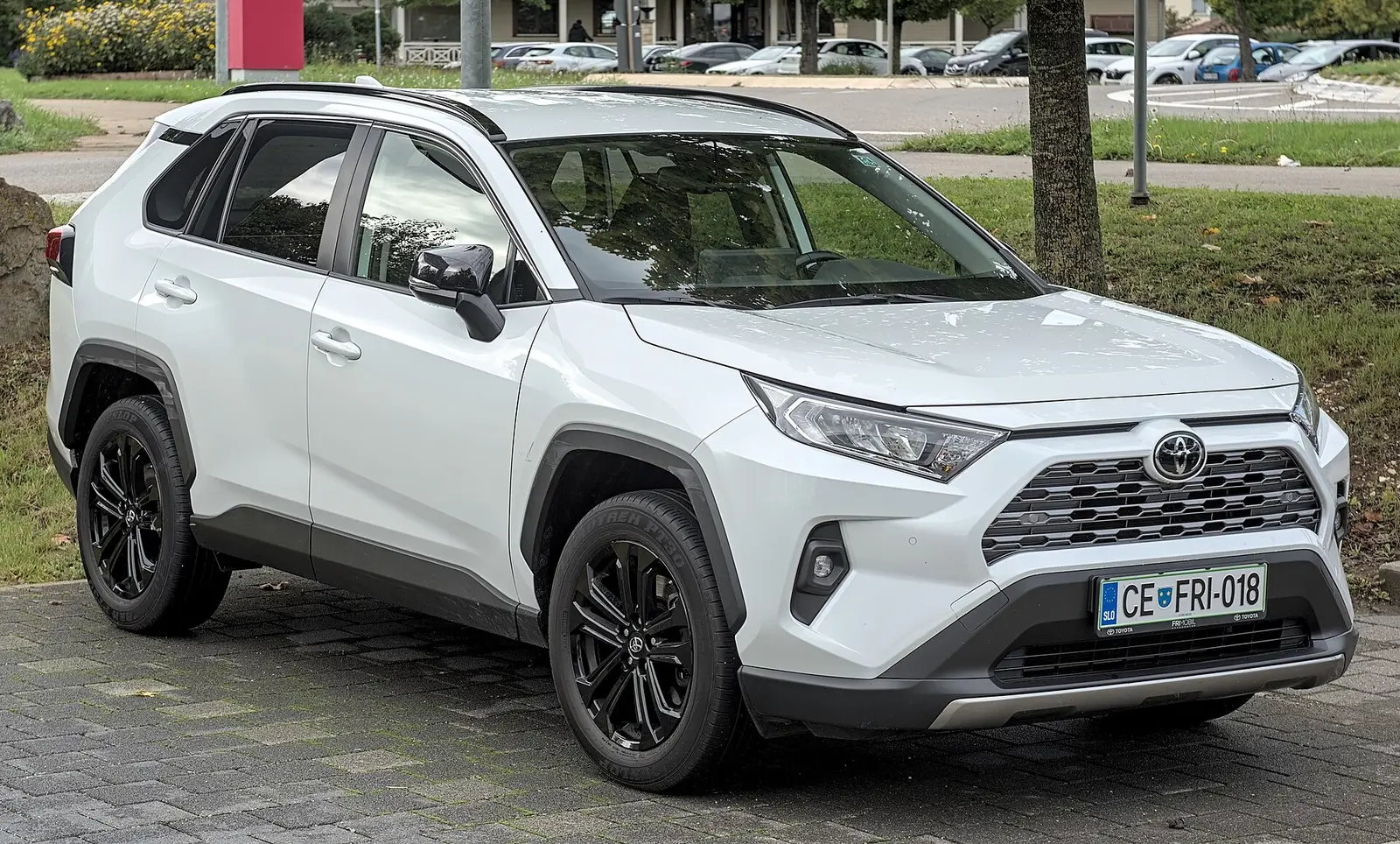
Toyota is probably the brand with the most firmly established reputation for reliability: hybrids that pass 300,000 km, city cars said to be indestructible, an image of a carmaker that is dependable rather than flashy. Does that reputation hold up at the roadworthiness test? To find out, we rely solely on the official results of France’s roadworthiness test (contrôle technique, UTAC-OTC data), not on owner reviews.
Toyota compared with other brands
Of the 38 brands tracked on this site, Toyota ranks 22nd, with a volume-weighted average retest rate of 20.92% across 28 tracked families (692,013 tests). That is nearly 2 points above the national benchmark (18.94% across all models, see the 2025 barometer). Toyota therefore sits mid-table, not among the leaders.
| Brand | Retest rate | Rank (/38) |
|---|---|---|
| Mazda | 13.81% | 4 |
| Hyundai | 14.86% | 5 |
| Lexus | 15.62% | 7 |
| Dacia | 16.78% | 10 |
| Citroën | 19.16% | 18 |
| Toyota | 20.92% | 22 |
| Kia | 21.82% | 25 |
| Volkswagen | 23.44% | 28 |
| Renault | 24.91% | 33 |
| Peugeot | 25.55% | 35 |
| Honda | 26.28% | 36 |
Toyota does better than Volkswagen, Renault, Peugeot and its fellow Japanese brand Honda, but trails Dacia, Citroën and, above all, the site’s two benchmarks, Mazda and Hyundai. Lexus, the Toyota group’s premium brand, does noticeably better (15.62%, 7th), on a smaller sample of 3 families. The full ranking is available on the rankings page (in French).
Model-by-model ranking
Here are the 28 tracked Toyota families, from most to least reliable:
| Model | Retest rate | National rank (/530) |
|---|---|---|
| Yaris I * | 2.00% | 2 |
| Yaris IV | 4.01% | 15 |
| Prius+ | 7.81% | 81 |
| RAV4 IV | 7.88% | 83 |
| RAV4 V | 7.88% | 84 |
| iQ | 8.27% | 94 |
| Corolla IX | 10.14% | 121 |
| RAV4 I | 13.19% | 175 |
| Land Cruiser Prado IV | 16.76% | 208 |
| Prius III | 16.93% | 211 |
| C-HR I | 19.83% | 253 |
| Land Cruiser Prado III | 20.53% | 258 |
| Land Cruiser Prado II | 20.53% | 259 |
| Yaris III | 20.72% | 265 |
| Auris II | 21.04% | 268 |
| Verso | 21.10% | 270 |
| RAV4 III | 22.53% | 285 |
| Aygo II | 23.41% | 301 |
| Avensis III | 26.12% | 353 |
| Corolla Verso II | 26.60% | 362 |
| RAV4 II | 27.66% | 377 |
| Avensis II | 27.77% | 379 |
| Corolla XII | 28.00% | 383 |
| Yaris II | 30.07% | 410 |
| Aygo I | 31.78% | 436 |
| Auris I | 32.81% | 463 |
| Prius II | 34.59% | 494 |
| Yaris Cross * | 36.90% | 516 |
* Two results should be treated with great caution. The Yaris I (sold from 1999 to 2005) posts 2.00%, the 2nd best result nationally, a rate that is not borne out in the UK, where the same generation fails its test more often than the average for its age band (see below). This is very probably an anomaly in the source data. Without the Yaris I, Toyota’s average rises from 20.92% to 21.92%. Conversely, the Yaris Cross (36.90%) rests on a small volume (4,460 tests) of vehicles taking their very first roadworthiness test, and contrasts with the very favourable result for the same model in the Netherlands.
The RAV4 IV and V post exactly the same rate, as do the Land Cruiser Prado II and III: the UTAC source appears to group these generations together.
The spread between models is very wide: 10 of the 28 families sit below the national rate, and 10 are above 25%.
Toyota’s strongest models
Setting the Yaris I aside, three families clearly stand out:
- Yaris IV: 4.01% retest rate (31,145 tests), 15th of 530. It is one of the very best city cars on the site, as our ranking by segment already showed.
- Prius+: 7.81% (4,629 tests), 81st, on a modest volume.
- RAV4 IV and RAV4 V: 7.88% each (21,814 and 15,846 tests), 83rd and 84th.
What these models have in common: they are recent generations, very largely hybrid. The C-HR I (19.83%, 47,523 tests), another recent, high-volume hybrid, sits just above the national average, however.
The models that do less well
The bottom of the ranking is mostly made up of older generations:
- Prius II: 34.59% (6,419 tests), 494th of 530.
- Auris I: 32.81% (22,068 tests), 463rd.
- Aygo I: 31.78% (38,249 tests), 436th.
The Yaris II (30.07%, 65,015 tests) also exceeds 30%. The age of these models explains part of the gap, but not all of it: other older models on the site do markedly better. The brand’s reputation does not, therefore, extend to every model in the range.
Manufacturer recalls
RappelConso lists 7 distinct notices concerning the Toyota families tracked on this site: RAV4 seat belts (2022), Avensis front airbag inflator (2022), auxiliary battery terminal on the Aygo and Yaris (2023, fire risk), incorrectly tightened wheel nuts on the Yaris and Yaris Cross (2023), reversing camera on the Prius and RAV4 (2025), instrument cluster across a large part of the range (C-HR, Corolla, RAV4, Yaris, Yaris Cross, 2025) and the rear door opener switch on the Prius (2026).
Counted using the same method as our ranking of recalls by brand (a recall counts once for each family it concerns), that comes to 41 cumulative recalls across 19 of the 28 tracked families, or around 14.6 recalls per 10 models, well below the most affected brands (Peugeot at 108.9, Opel at 87.2). This cumulative figure nonetheless overstates reality: RappelConso notices do not specify the generation concerned, and a single notice is attached to every generation of the model named, including the oldest (the first-generation RAV4, for example, ends up linked to the 2025 reversing camera recall). As with other brands, a recall does not mean a widespread defect across every vehicle of the model concerned.
The view from abroad
The Dutch (APK) and British (MOT) tests have neither the same rules nor the same schedule as the French roadworthiness test: the rates cannot be compared directly, but relative positions are more meaningful (see our article on comparing tests across countries).
In the Netherlands, Toyota accounts for 979,973 APK tests, with an average failure rate of 41.36%. This raw figure does not account for age, yet nearly 40% of Toyota tests concern vehicles more than 15 years old. Age for age, Toyota does better than the national average in every age band:
| Age band | Toyota | National average (NL) |
|---|---|---|
| 3-5 years | 19.38% | 23.24% |
| 5-8 years | 24.43% | 26.51% |
| 8-11 years | 29.17% | 32.18% |
| 11-15 years | 36.02% | 39.72% |
| 15 years + | 44.05% | 47.50% |
The Yaris Cross in particular fails in 11.27% of cases in its 3-5 year band (5,449 tests), against a national average of 23.24%. Full details are on the Toyota in the Netherlands page.
In the UK, DVSA MOT data places Toyota 17th of 29 brands (29.30% average failure rate across 37 tracked generations). Here too, Toyota does better than the national average in every age band except vehicles over 15 years old. Among the most-tested generations, the RAV4 Mk5 fails in 8.12% of cases in its main band (3-5 years, against an average of 14.66%), the Prius Mk4 in 13.61% (5-8 years, against 20.54%) and the C-HR in 13.37% (3-5 years, against 14.66%).
The first Yaris (XP10, 1999-2004), which corresponds to the French Yaris I, fails in 45.04% of cases in the UK, however, against an average of 40.80% for its age band (15 years +), hence the caveat expressed above about its French result. Full details are on the Toyota in the UK page.
What these figures don’t tell you
The retest rate measures the safety points that are checked, not overall mechanical reliability (engine, gearbox, hybrid system). A good result at the roadworthiness test does not guarantee a car will never break down; see the methodology (in French).
Conclusion
Myth or reality? The data gives a nuanced answer. In France, Toyota is not among the best brands at the roadworthiness test: 22nd of 38, above the national rate, behind Mazda, Hyundai, Dacia and Citroën. But the range is very uneven, with recent hybrid generations (Yaris IV, RAV4 IV and V, Prius+) among the best on the site, and older generations (Prius II, Auris I, Aygo I) in the bottom quarter of the ranking. In the Netherlands and the UK, age for age, Toyota does better than average in practically every band. The reputation therefore holds mainly for recent models. When buying used, the model and generation matter more than the badge: the model-by-model detail is on the Toyota brand page (in French), and our budget tool lets you compare models within a given price range.
Data sources: UTAC-OTC (France roadworthiness test, 2025), RappelConso (data.gouv.fr), RDW (Netherlands, CC0 licence), DVSA MOT testing data (UK, Open Government Licence v3.0). Full methodology on the methodology page (in French).
— Also worth reading
Barometers & Studies
Dacia: Is a Budget Car Less Reliable? What the Roadworthiness Test Shows
Sandero, Duster, Logan... What does France's official UTAC-OTC data say about Dacia? Retest rates by model, comparison and recalls.
16 October 2026 · 6 min read
Barometers & Studies
Lancia: What Do the APK and Roadworthiness Test Data Show?
A rare sight in France these days, Lancia is still on the road in the Netherlands. APK pass rates and French data, model by model.
4 October 2026 · 4 min read
Barometers & Studies
Is Seat Reliable? What the APK and Roadworthiness Test Data Show
APK pass rates in the Netherlands and retest rates in France, model by model, across the Seat range.
1 October 2026 · 5 min read