Practical Guides
FRPeugeot 307 and 1007: What Does the Roadworthiness Test Show?
Published 6 October 2026 · 4 min read
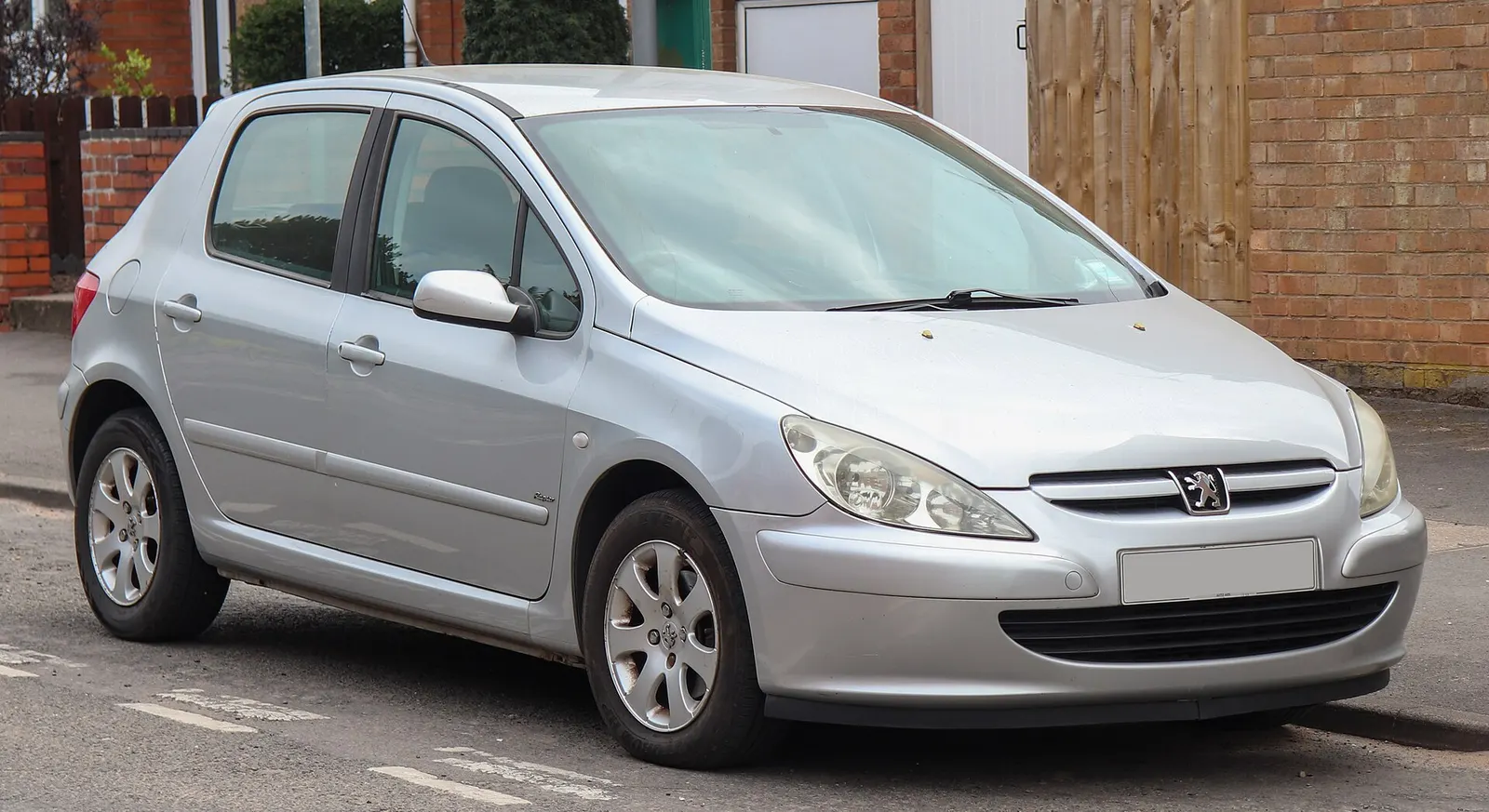
The Peugeot 307 was one of the best-selling family hatchbacks of the 2000s, and the 1007 remains one of the most unusual city cars of its day (sliding side doors). Both can now be picked up cheaply on the used market. Here’s what the official roadworthiness test data shows.
Peugeot 307
With 187,706 roadworthiness tests, the Peugeot 307 is still very much part of the French fleet. Its retest rate stands at 31.55%, 12.6 points above the national rate (18.94%). It ranks 430th out of 530 model families tracked.
That is also well above the brand average: Peugeot posts a weighted average of 25.55% across its 36 families and ranks 35th out of 38 brands in our 2025 Barometer.
One caveat: the 307 shares exactly the same rate as its successor, the 308 I (31.55%, 429th). The source data sometimes publishes a single rate for closely related models. This figure is therefore best read as a ballpark for this family of Peugeot hatchbacks rather than a measurement specific to the 307 alone.
Peugeot 1007
The Peugeot 1007 is far rarer: 18,204 tests. Its retest rate is 23.92%, 5 points above the national rate, which puts it 308th out of 530.
It does slightly better than the Peugeot average (25.55%), and clearly better than the 307: the gap between the two is almost 8 points.
Against their rivals of the time
For the 307, the comparison with 2000s family hatchbacks puts it among the older models most often sent back for a retest, alongside the Mégane II and the Golf IV. The Citroën C4 I does much better:
| Model | Tests | Retest rate | National rank (/530) |
|---|---|---|---|
| Citroën C4 I | 86,417 | 12.83% | 171 |
| Peugeot 307 | 187,706 | 31.55% | 430 |
| Renault Mégane II | 71,387 | 32.10% | 445 |
| Volkswagen Golf IV / Bora | 65,675 | 33.27% | 476 |
For the 1007, the small MPVs and city cars of the same period all do markedly better:
| Model | Tests | Retest rate | National rank (/530) |
|---|---|---|---|
| Ford Fusion | 21,642 | 5.77% | 40 |
| Citroën C3 I | 213,687 | 6.47% | 55 |
| Renault Modus | 106,072 | 11.10% | 137 |
| Peugeot 1007 | 18,204 | 23.92% | 308 |
These gaps should be kept in perspective: the exact make-up of the fleet tested (average age, mileage) differs from one model to another, and it affects the rate.
Manufacturer recalls
RappelConso lists no recalls for either the 307 or the 1007. That comes as no surprise: the public database has only existed since 2021, long after both models went out of production. The absence of a listed recall therefore says nothing about their recall history while they were on sale. Brand-level context is set out in our recalls ranking.
Seen from abroad
Both models also go through the APK in the Netherlands, and the 307 through the MOT in the United Kingdom. Almost all the tests tracked involve cars aged 15 or over:
| Country | Model | Tests (15 years +) | Failure rate | National average |
|---|---|---|---|---|
| Netherlands (APK) | 307 | 42,050 | 52.10% | 47.50% |
| Netherlands (APK) | 1007 | 3,841 | 45.30% | 47.50% |
| United Kingdom (MOT) | 307 | 37,638 | 51.89% | 40.80% |
For the 307, the picture matches France: above average in both countries, and well above it in the UK (+11 points). The 1007, on the other hand, does slightly better than the Dutch average for its age bracket. It isn’t tracked in the UK.
Two caveats apply to the Dutch figures: the RDW doesn’t distinguish between generations, and the pass/fail result isn’t published directly but inferred from the defects recorded. Finally, these foreign pages aren’t yet linked to the French model pages in our cross-country mapping table: the comparison here is based on the model name (see can we really compare roadworthiness test rates across countries?).
What do they cost today?
We don’t give a price range for these two models. Our used-price estimate relies on a reference new price and an age-based depreciation curve capped at 15 years: we have no model-specific new price for the 307 or the 1007, and every car still on the road is older than that. A figure shown here would therefore be a segment approximation, not a reliable estimate for these cars. To compare affordable models within your budget, the budget simulator ranks model families by price and estimated running costs.
Key points before you buy
The retest rate measures compliance with the safety items checked, not overall mechanical reliability (engine, gearbox, clutch). On cars of this age, how the individual vehicle has actually been maintained matters far more than the model: see the methodology. On this measure, the 307 sits among the models most often sent back for a retest in France, on a par with the Mégane II and the Golf IV. The 1007 fares better, but still trails the small rival models of its era. Model-by-model detail is available on the Peugeot brand page.
Data sources: UTAC-OTC (French roadworthiness test, 2025), RDW (Netherlands, CC0 licence), DVSA MOT (United Kingdom, Open Government Licence v3.0), RappelConso (data.gouv.fr). Full methodology on the methodology page.
— Also worth reading
Practical Guides
Ford: Fiesta, Focus, Kuga... What Does the Roadworthiness Test Show?
What does official UTAC-OTC data say about Ford? Retest rates by model, comparison with other brands, recalls and the view from abroad.
22 October 2026 · 5 min read
Practical Guides
Clio, 208 or C3: Which City Car Does Best at the Roadworthiness Test?
A comparison of France's three best-selling city cars based on official UTAC-OTC data: retest rates, national ranking, recalls and used prices.
19 October 2026 · 6 min read
Practical Guides
From What Age Does Retest Risk Really Increase?
Official UK and Dutch roadworthiness data show precisely at what age failure risk climbs. Here's the real curve, band by band — not a rule of thumb.
24 August 2026 · 5 min read