Practical Guides
FRClio, 208 or C3: Which City Car Does Best at the Roadworthiness Test?
Published 19 October 2026 · 6 min read
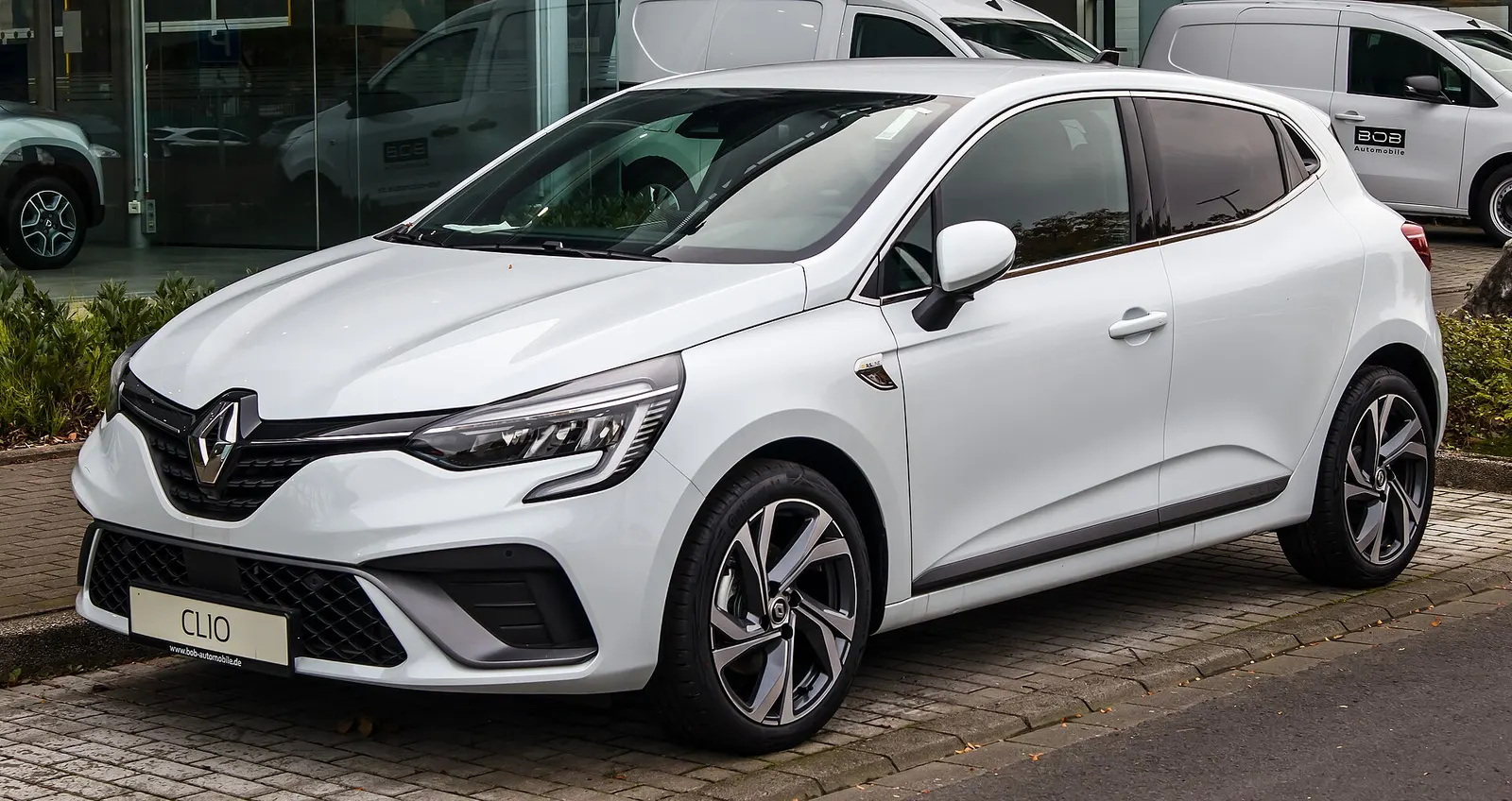
Renault Clio, Peugeot 208, Citroën C3: France’s three best-selling city cars are often weighed against each other when it comes to buying, new or used. To compare them on a verifiable measure, here is what the official French roadworthiness test data (UTAC-OTC) shows, generation by generation.
The comparison table
The national retest rate is 18.94%, and the average across the 18 city cars tracked in our segment rankings is 18%. The years shown are each generation’s production years.
| Generation | Years | Inspections | Retest rate | National rank (/530) | Gap to city-car average |
|---|---|---|---|---|---|
| Renault Clio V | 2019- | 151,567 | 14.36% | 182 | −3.6 pts |
| Peugeot 208 II | 2019- | 128,584 | 14.40% | 183 | −3.6 pts |
| Citroën C3 III | 2016-2023 | 246,337 | 22.41% | 283 | +4.4 pts |
| Peugeot 208 I | 2012-2018 | 451,811 | 25.94% | 350 | +7.9 pts |
| Renault Clio IV | 2012-2018 | 478,927 | 26.56% | 360 | +8.6 pts |
| Citroën C3 II | 2010-2015 | 231,956 | 27.90% | 380 | +9.9 pts |
All of these volumes are large (more than 128,000 inspections per generation), so the rates are statistically robust. The C3 II is not one of the 18 models used to calculate the city-car average, but its gap is shown for comparison.
Current generation: Clio V, 208 II, C3 III
The Clio V and the 208 II are level: 14.36% against 14.40%, a gap of 0.04 points, in consecutive places (182nd and 183rd). Both do better than the national rate, by around 4.5 points. On this measure, there is nothing to separate them.
The C3 III stands at 22.41%, 8 points higher. But the comparison is not a fair one: the C3 III went on sale in 2016, three years before the Clio V and the 208 II. Its inspected fleet is therefore older on average, and age weighs heavily on the retest rate (see from what age does retest risk really increase). The French data does not publish each model’s rate by age band, so this gap cannot be corrected using it. British data, covered further down, does allow these models to be compared at the same age.
To view all three side by side: compare the Clio V, 208 II and C3 III.
Previous generation: Clio IV, 208 I, C3 II
The three previous-generation models are close together: 25.94% for the 208 I, 26.56% for the Clio IV, 27.90% for the C3 II. Less than 2 points separate first from last, and the C3 II, built from 2010, is again the oldest of the three. There is no clear winner in this generation.
All three sit well above the national rate (by 7 to 9 points) and the city-car average (by 8 to 10 points). They are now 8 to 16 years old, and that level largely reflects their age. Their ranking (between 350th and 380th out of 530) is still less unfavourable than that of the generations before them: the Clio III and the 207 both exceed 32%.
To view them side by side: compare the Clio IV, 208 I and C3 II.
Manufacturer recalls
Number of recalls listed by RappelConso on each model page:
| Generation | Recalls listed | Of which specific to this generation |
|---|---|---|
| Clio V | 6 | 3 |
| Clio IV | 4 | 1 |
| 208 II | 38 | 11 |
| 208 I | 27 | 0 |
| C3 III | 8 | 0 |
| C3 II | 8 | 0 |
These figures need to be read with care. RappelConso notices often name the model without specifying the generation, so the same recall ends up attached to several generations at once. All 27 of the 208 I’s recalls are thus among the 208 II’s 38, and the three C3 generations share the same list of 8. Only the right-hand column isolates recalls that explicitly target one generation.
Counting each recall only once per model gives 7 recalls for the Clio, 38 for the 208 and 8 for the C3. Some of the 208’s also concern other models in the group (2008, 308, Rifter…), because they relate to shared engines or components. A recall flags a defect the manufacturer fixes free of charge, not an observed breakdown: it should not be read as a reliability indicator. The brand-level picture is set out in our recall rankings.
The view from abroad
The British roadworthiness test (MOT) publishes its results by generation and by age band. That is exactly what the French data lacks to compare these models at the same age. MOT failure rates by vehicle age:
| Age | UK national average | Clio | 208 | C3 |
|---|---|---|---|---|
| 3 to 5 years | 14.66% | V: 18.70% · IV: 19.76% | II: 12.64% · I: 17.09% | III: 12.82% |
| 5 to 8 years | 20.54% | IV: 33.32% | I: 23.56% | III: 22.32% · II: 28.99% |
| 8 to 11 years | 29.85% | IV: 44.40% | I: 34.55% | II: 36.98% |
Each cell is based on more than 7,000 tests, and most on more than 10,000. Two findings stand out. First, at the same age, the C3 III does as well as the 208 II (12.82% against 12.64% at 3 to 5 years): its lag in France is therefore probably due in large part to the age of its fleet. Second, the Clio is the most often failed of the three in the UK, in every age band, whereas it is level with the 208 in France.
Gaps like these between countries are common: the two tests do not cover the same items, with different thresholds and different patterns of use (see can we really compare roadworthiness test rates across countries). The British result does not replace the French one: it provides the like-for-like age comparison the French data cannot. In the Netherlands, the RDW does not distinguish between generations and the APK result is inferred from the defects recorded, so we do not use it for this comparison.
What about budget?
Reference new price (core of the range) and used estimate by age, from our depreciation model. This is an indicative estimate, not a valuation: condition, actual mileage, engine and trim level move prices well beyond it.
| Generation | Reference new price (range) | Estimate at 6 years | Estimate at 10 years |
|---|---|---|---|
| Clio V | €18,000 (€14,100 to €24,100) | €8,986 | €6,162 |
| 208 II | €20,000 (€15,500 to €26,300) | €9,985 | €6,847 |
| C3 III | €15,500 (€12,950 to €18,300) | €7,738 | €5,306 |
| Clio IV | €16,900 (€13,700 to €19,900) | €8,437 | €5,786 |
| 208 I | €16,000 (€12,600 to €19,000) | €7,988 | €5,478 |
We do not give an estimate for the C3 II: we have no new price specific to this generation, and a segment-level figure would be misleading. To compare the models within your budget, along with their estimated running costs, see the budget simulator.
What these figures don’t tell you
The retest rate measures the safety items that are inspected (brakes, suspension and steering, lighting, emissions), not overall mechanical reliability: the engine, gearbox and clutch are not inspected. It also depends on the age and mileage of the inspected fleet, which differ from one model to another. When two models are a few tenths of a point apart, like the Clio V and the 208 II, there is no winner. See the methodology.
Our reading
In the current generation, the Clio V and the 208 II are level in France, clearly better than the national rate. The C3 III appears to lag behind, but it is older. Compared at the same age in the UK, it sits at the same level as the 208 II. In the previous generation, the three models are grouped within 2 points, and none stands out.
In practice, the gap between two generations of the same model matters far more than the gap between the three brands: a Clio V or a 208 II is sent back for a retest much less often than a Clio IV or a 208 I. When buying used, the individual car’s service history and its last roadworthiness test report count for more than the choice between these three models. Every generation is covered on the Renault, Peugeot and Citroën brand pages, and in the 2025 rankings.
Data sources: UTAC-OTC (French roadworthiness test, 2025), DVSA MOT (United Kingdom, Open Government Licence v3.0), RappelConso (data.gouv.fr). Full methodology on the methodology page.
— Also worth reading
Practical Guides
Ford: Fiesta, Focus, Kuga... What Does the Roadworthiness Test Show?
What does official UTAC-OTC data say about Ford? Retest rates by model, comparison with other brands, recalls and the view from abroad.
22 October 2026 · 5 min read
Practical Guides
Peugeot 307 and 1007: What Does the Roadworthiness Test Show?
Two 2000s Peugeots still much sought after second-hand: retest rates, national ranking and recalls, based on official UTAC-OTC data.
6 October 2026 · 4 min read
Practical Guides
From What Age Does Retest Risk Really Increase?
Official UK and Dutch roadworthiness data show precisely at what age failure risk climbs. Here's the real curve, band by band — not a rule of thumb.
24 August 2026 · 5 min read