Barometers & Studies
FRBMW, Mercedes, Audi: Are Premium Cars More Reliable at the Roadworthiness Test?
Published 24 October 2026 · 6 min read
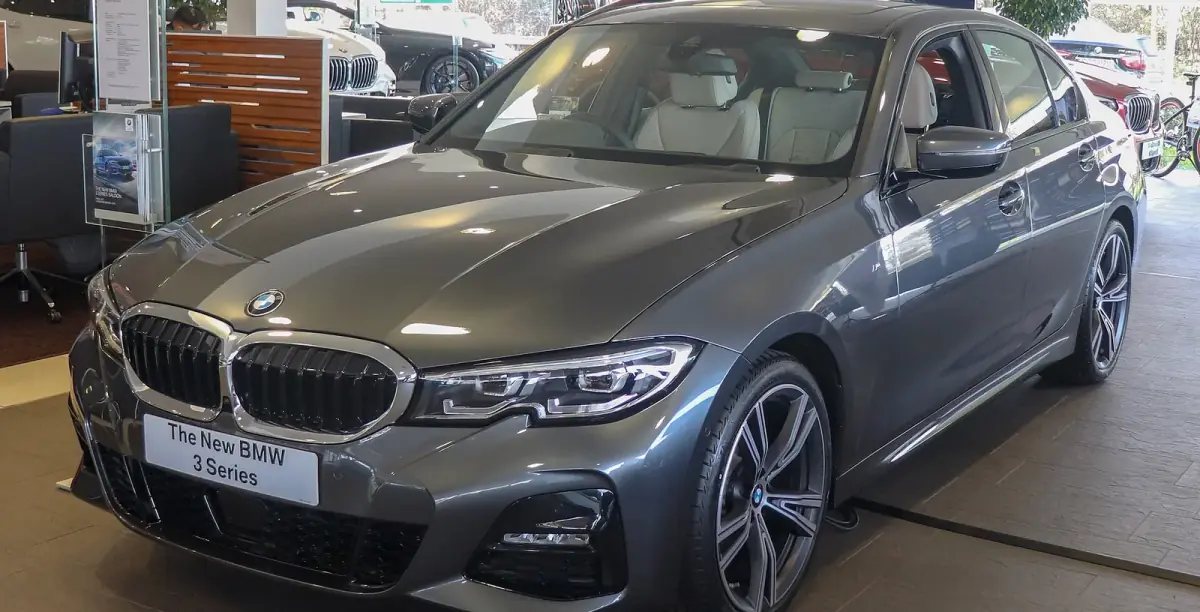
A premium car is supposedly better built, and therefore more reliable: it’s a widely held idea, and it often justifies the price gap with a mainstream model. Official data from France’s roadworthiness test (UTAC-OTC) makes it possible to test this on the three German premium brands, BMW, Mercedes and Audi, with more than 1.7 million tests between them.
The three brands against the mainstream makes
Out of the 38 brands tracked by this site, here is where the three German brands stand, compared with the national retest rate (18.94%, all models combined):
| Brand | Average retest rate | Rank (/38) | Gap to national rate |
|---|---|---|---|
| Audi | 17.76% | 11th | −1.18 points |
| Mercedes | 18.48% | 14th | −0.46 points |
| BMW | 18.55% | 16th | −0.39 points |
All three brands come in below the national rate, but only just. They do clearly better than the big mainstream makes: Toyota (20.92%, 22nd), Volkswagen (23.44%, 28th), Renault (24.91%, 33rd) and Peugeot (25.55%, 35th). They are not at the top, however: Mazda (4th), Hyundai (5th), Lexus (7th), Jeep (8th), Land Rover (9th) and Dacia (10th, 16.78%) all finish ahead of all three.
Premium as a whole is not uniform. Among the other premium brands tracked, Porsche (18.07%), DS (18.40%) and Volvo (18.48%) sit at the same level as the German trio, while Alfa Romeo (21.08%, 23rd) and especially Mini (25.46%, 34th) are clearly behind. Grouping the 143 families of the 13 brands the site classes as premium, the volume-weighted average comes to 19.02%, against 23.09% for the 387 families of all other brands. The full ranking is available in the 2025 rankings (in French).
BMW
BMW has 32 families tracked (613,708 tests), with an average rate of 18.55%. The spread between models is very wide. Among families with a sufficient sample, the best results come from recent generations: the 4 Series I and the 3 Series VII both post 6.19%, ranking 47th and 48th nationally out of 530 models.
At the other end, the 5 Series IV (31.41%, 425th) and the 3 Series V (29.73%, 407th) drag the brand down. The 3 Series V carries a lot of weight: with 64,642 tests, it is BMW’s most represented family. The 1 Series I and II, the brand’s second- and third-largest volumes, stand at 25.29%. The very good rates of the 2 Series Coupé/Convertible (5.17%) and of the first-generation X4, X5 and X6 rest on fewer than 10,000 tests each. Full detail on the BMW brand page (in French).
Mercedes
Mercedes has 32 families tracked (547,256 tests), with an average rate of 18.48%. Among families with a sufficient sample, the A-Class I (6.27%, 51st) and the GLC I (7.88%, 82nd) achieve the best results. The M-Class I even posts the 3rd best rate in the country (2.20%), but on just 6,834 tests.
The weakest results come from the A-Class II (34.39%, 490th, on 39,714 tests) and the Vito II / Viano (36.70%, 514th, on 9,900 tests). The C-Class II and III, both high-volume families for the brand, stand at 28.89%. Full detail on the Mercedes brand page (in French).
Audi
Audi is the best ranked of the three: 27 families tracked (625,545 tests), with an average rate of 17.76%. Among families with a sufficient sample, the Q5 II (4.96%, 25th) and the A5 I (8.59%, 99th) lead the way. The TT I does even better (4.26%), on 7,369 tests.
At the bottom, the A4 II (34.30%, 488th) and the A3 I (32.97%, 469th) bring up the rear. The A3 illustrates the gap between generations: the A3 II, the most-tested family of all three brands (84,605 tests), stands at 32.19%, while the A3 III drops to 10.64%. Full detail on the Audi brand page (in French).
Across all three brands, the same pattern emerges: recent generations fill the top of the ranking, older ones the bottom. Note that several pairs of generations share exactly the same rate in the source data (A3 III and IV, 1 Series I and II, C-Class II and III), so they should not be read as two independent results.
Manufacturer recalls
On this point, the trio does not stand out favourably. Counted using the method of our recalls ranking by brand (a recall counts once for each family it concerns), RappelConso lists:
| Brand | Cumulative recalls | Distinct notices | Rank (/38) |
|---|---|---|---|
| BMW | 241 | 48 | 3rd |
| Audi | 229 | 38 | 4th |
| Mercedes | 72 | 24 | 9th |
BMW and Audi sit just behind Peugeot (392) and Citroën (246), and Audi remains 3rd once the total is adjusted for the number of models tracked. At BMW, each X3 generation has accumulated 27 recalls. At Mercedes, the two Vito generations alone account for 44 of the 72 recalls. A recall does not mean a defect on every vehicle, and it covers defects the roadworthiness test does not necessarily measure.
Seen from abroad
The British (DVSA, MOT test) and Dutch (RDW, APK test) data tracked by this site also place the three brands near the top: BMW 2nd, Audi 4th and Mercedes 5th out of 29 brands in the UK; Audi 3rd and BMW 4th in the Netherlands, where Mercedes (37.0%) sits just below the national rate (37.5%).
These two countries have one advantage over France: their results are broken down by age band. Each brand can therefore be compared with the national average at equal age. Using this calculation (observed failures relative to the failures expected for the age of the vehicles tested, with 1.00 being the average), BMW scores 0.79 in the UK and 0.89 in the Netherlands, the best figure among brands with more than 100,000 tests in both countries. Audi follows closely (0.82 and 0.90). Mercedes is closer to the average (0.92 and 0.96), on a par with Toyota (0.90 and 0.91), while Renault (1.33 and 1.10) and Peugeot (1.19 and 1.07) are above it. As an example, for vehicles aged 5 to 8 in the UK: a 15.3% failure rate for BMW, 16.0% for Audi and 19.1% for Mercedes, against 20.5% nationally.
This calculation is specific to this article. It draws on the data published in the site’s UK and Netherlands sections (in French), excluding BMW motorcycles from the British dataset. On the Dutch side, a failure is inferred from the defects recorded and generations are not distinguished. These results do not carry over directly to France.
The real cost of a used premium car
A premium car loses value faster than a mainstream one, which can make a ten-year-old BMW, Mercedes or Audi as affordable as a family hatchback. The site’s estimates (an indicative estimate, not a valuation) show this:
| Model | Reference new price | At 3 years | At 6 years | At 10 years |
|---|---|---|---|---|
| Audi A3 III | €30,000 | €18,586 | €12,666 | €7,595 |
| Mercedes C-Class IV | €39,000 | €24,161 | €16,465 | €9,874 |
| BMW 1 Series II | €31,000 | €19,205 | €13,088 | €7,849 |
| Volkswagen Golf VII | €25,000 | €16,200 | €11,810 | €7,748 |
The purchase price converges, but repair costs do not. In the price scale used by the site, a job costs on average 1.5 to 2 times more on a premium car than on a family hatchback: €900 versus €385 for front discs and pads, €1,750 versus €1,000 for a clutch kit, €2,750 versus €1,450 for a turbo. As a result, with a comparable retest rate (25.29% versus 24.04%), the roadworthiness-related budget index of a BMW 1 Series II is twice that of a Golf VII (€110.65 a year versus €52.38). To compare models within a given budget, see the budget simulator (in French).
What these figures don’t tell you
The retest rate measures the safety points checked, not overall mechanical reliability (engine, gearbox, electronics). The French data also does not give the age of the vehicles tested: if the premium cars presented for testing are newer or better maintained than mainstream ones, part of their lead may come from that rather than from how the cars are designed. The equal-age data from abroad suggests that BMW’s and Audi’s advantage holds up after this correction, without proving it for France. See the methodology page (in French).
Our reading
Yes, but less than people think. At the French roadworthiness test, BMW, Mercedes and Audi do clearly better than the French mainstream makes and Volkswagen, and slightly better than the national average. They are not, however, the most reliable brands: Dacia, Mazda, Hyundai and Lexus all finish ahead. Audi is the most consistent of the three, BMW the most convincing abroad, Mercedes the closest to the average. These brands also accumulate a lot of recalls (BMW and Audi especially) and cost considerably more to repair. Above all, the gap between models within the same brand far exceeds the gap between brands: an Audi A3 II or a Mercedes A-Class II does worse than most mainstream cars. The badge matters less than the model and the generation.
Source data: UTAC-OTC (French roadworthiness test, 2025), RappelConso (data.gouv.fr), DVSA (MOT, United Kingdom), RDW (APK, Netherlands). Full methodology on the methodology page (in French).
— Also worth reading
Barometers & Studies
Alfa Romeo: Does the Bad Reputation Hold Up at the Roadworthiness Test?
MiTo, Giulietta, 159, Giulia... What does the official UTAC-OTC data say about Alfa Romeos? Retest rates by model, comparisons and recalls.
19 November 2026 · 6 min read
Barometers & Studies
Dacia: Is a Budget Car Less Reliable? What the Roadworthiness Test Shows
Sandero, Duster, Logan... What does France's official UTAC-OTC data say about Dacia? Retest rates by model, comparison and recalls.
16 October 2026 · 6 min read
Barometers & Studies
Toyota: Does Its Reliability Reputation Hold Up at the Roadworthiness Test?
What does France's official UTAC-OTC data say about Toyota? Retest rates by model, comparison with other brands, and recalls.
10 October 2026 · 6 min read